The Small Church Media Setup That Actually Works With One Volunteer
August 3, 2026
Most "how to build your church media setup" content gets written for a church that already has a team. A sound person, a camera person, a media director, someone doing graphics. If that's not your church, most of that advice just doesn't apply, and following it anyway is how churches end up with gear nobody can actually run.
If it's you, maybe you and one other person, running sound, slides, and the stream on a given Sunday, the priorities look completely different. Here's what actually matters first.
Start with what breaks the service if it fails
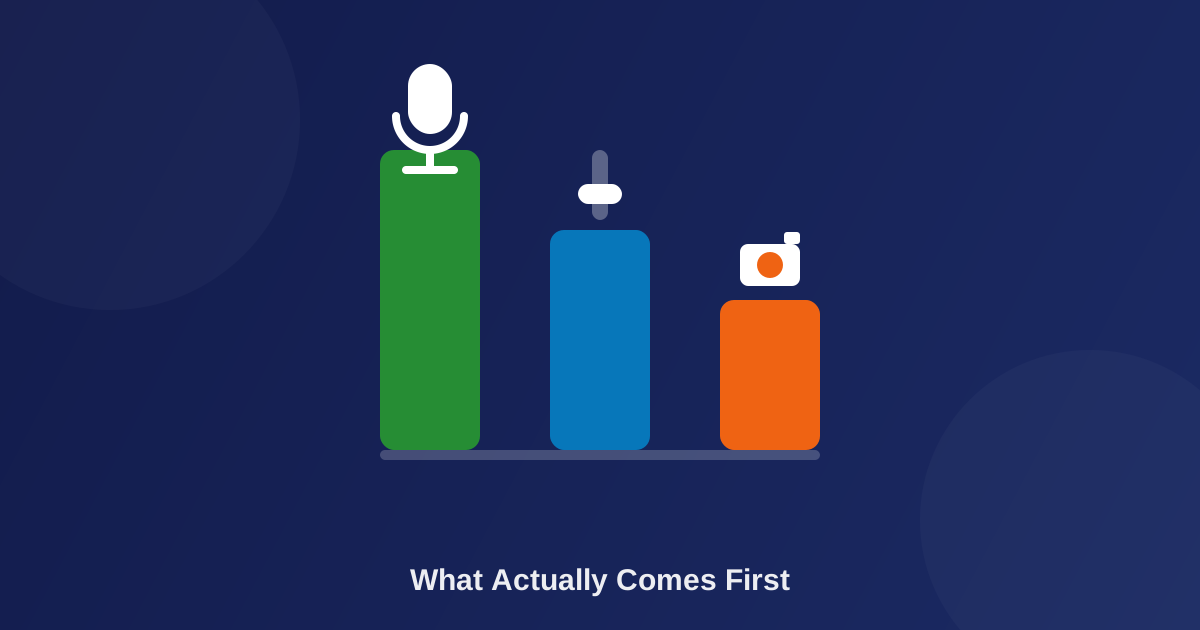
Before buying anything, ask what actually stops the service from functioning if it goes wrong. Usually that's audio. If people can't hear the message, nothing else about the production matters, not the camera angles, not the graphics, not the stream quality. That's why sound gets first priority, every time, even before a second camera or better lighting. If that's the piece keeping you up at night, the Sunday Morning Sound Cheat Sheet covers exactly what to check when the sound goes wrong.
What to prioritize buying first
- A board you and your one volunteer can actually learn, not the one with the most features. A capable board that only one person understands is the same single point of failure as no board at all.
- Solid mics for the platform party, since that's the audio source everything else depends on. Wireless lapel or headset mics that stay connected reliably matter more here than anything downstream.
- A basic monitor mix, even just one or two wedges, so whoever's leading can actually hear themselves. Skipping this creates its own cascade of problems during the service.
- One reliable camera and a way to get it into your stream. One good angle beats three mediocre ones you don't have the hands to switch between anyway. OBS is a solid, free way to bring that camera into a real stream.
What's genuinely fine to skip for now
- Multi-camera switching setups. A second or third camera adds production value, but only once your one-camera stream is solid and someone actually has time to run more angles.
- Stage lighting beyond basic visibility. Worship lighting is a nice to have once the fundamentals are covered, not a starting point purchase.
- Top tier gear across the board. A mid-range board a volunteer can confidently run beats an advanced one that sits half-used because nobody had time to learn it.
None of this is about settling for less. It's about sequencing, buying and building in the order that actually keeps a service running with the hands you have, not the team you wish you had.
Why this order matters more than the gear itself
A full AV team setup and a one-volunteer setup can use a lot of the same equipment. What actually differs is what gets attention first and what waits. A church trying to run a five-person setup with one person ends up with something half-configured across every category, sound half-dialed, camera half-set, stream half-working. A church that picks essentials first and builds out from there ends up with a smaller setup that actually works, every week, without anyone scrambling.
That's the real difference between a small church media setup and a media setup for a church that happens to be small. One's built for the team you have. The other's a shrunk down version of somebody else's team.
A note on cost
Real gear costs real money, and specific numbers depend heavily on what you already own and what your building actually needs, so this isn't the place to throw out a made up total. The honest guidance is the sequencing above. Get sound solid before you spend on anything downstream of it, and let each next purchase come from an actual gap you've hit, not a wish list.
Running this with one person long term takes more than gear sequencing too. If burnout is creeping in from carrying all of it solo, this post on why tech teams burn out and how cross-training fixes it is the next place to look.
Follow along for more on what to prioritize at your specific stage, and drop a comment with what your current setup looks like so future posts can actually address it.
Get new posts by email
No spam, just a note whenever a new post goes up.
Comments
Be the first to leave a comment.