Training a Volunteer Media Team When You Don't Have Time to Train Anyone

By Nikki
August 8, 2026 · 3 min read · Updated September 30, 2026
Someone hands a brand-new volunteer a headset five minutes before the service starts and says "just follow along," and that's not training, that's crossing your fingers. It usually means the run sheet gets reinvented by trial and error, live, in front of the exact people that Sunday is actually for. You knew this needed fixing. You just never found the hours to fix it.
Training doesn't mean carving out hours you don't have
Here's the reframe that actually matters: training isn't a separate block of time bolted onto an already full week. It's built into what's already happening every single Sunday. Nobody handed a new volunteer needs a syllabus or a training manual sitting in a shared drive nobody opens. They need a shadow session and something written down they can actually reference mid-service. That's it. That's the whole program.
Start with a shadow Sunday, not a lecture
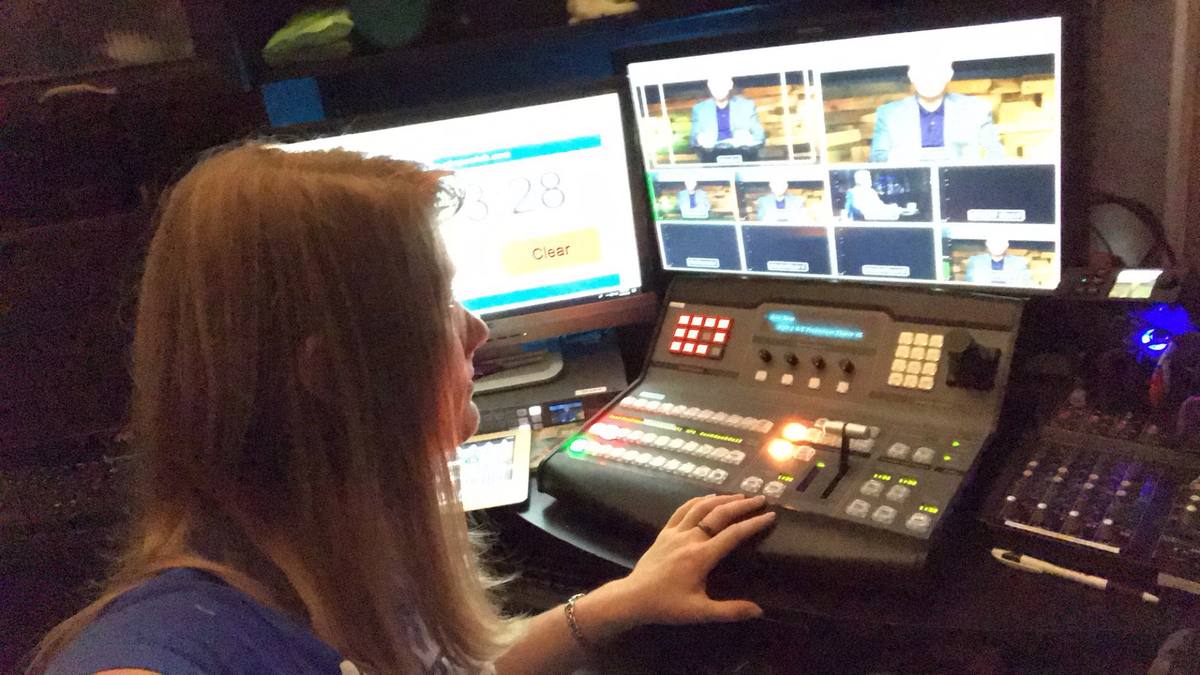
Have the new volunteer stand next to whoever's already running the role for one full service, watching only, zero pressure to perform live. Explain the why as it happens in real time, "I'm pulling this fader down because that's the mic that's about to feed back," not in the abstract a week beforehand where none of it sticks. People learn a booth by watching it happen in context, not by being talked at in a conference room.
Give them the written reference on day one, not week three
If you've got a real Sunday run sheet, that's your training material, hand it over on day one, not once they've already fumbled through a few services. A written run sheet with real times and specific cues means a new volunteer isn't relying on memory or guessing what "get things going" means under pressure. If you don't have one of those yet, building it is honestly step zero, before you train anyone on anything.
One role, not the whole booth
Don't try to teach sound, ProPresenter, and camera all in the same week. Pick the single lowest-stakes role, the one where a mistake doesn't take the whole service down, and let a new volunteer own just that until it's automatic. Add the next role only once the first one doesn't need active thought anymore. Trying to hand someone the entire booth at once is how you end up with a volunteer who's overwhelmed and a booth that's still short-handed six months later.
This is the actual fix for burnout, not a separate project
If the same two or three people are the only ones who can run anything, this shadow-first, one-role-at-a-time approach is the real mechanism behind fixing that, not some separate cross-training initiative you have to find extra time for. It's the same root problem covered here: a team that depends on specific individuals instead of a team that can actually flex. Training new volunteers this way, a little at a time, built into Sundays you're already running, is how that team gets built without ever blocking off a training day nobody has.
If you don't have a written run sheet yet, that's the actual starting point here. Grab the Sunday Checklist, it's built so anyone stepping in for the first time, not just the person who's always done it, can actually follow along.
Stay in the loop
Pick what you want to hear about. I'll only email when there's something useful to share, and you can unsubscribe any time.
Your email stays private. Read the Privacy Policy.
Comments
Be the first to leave a comment.